



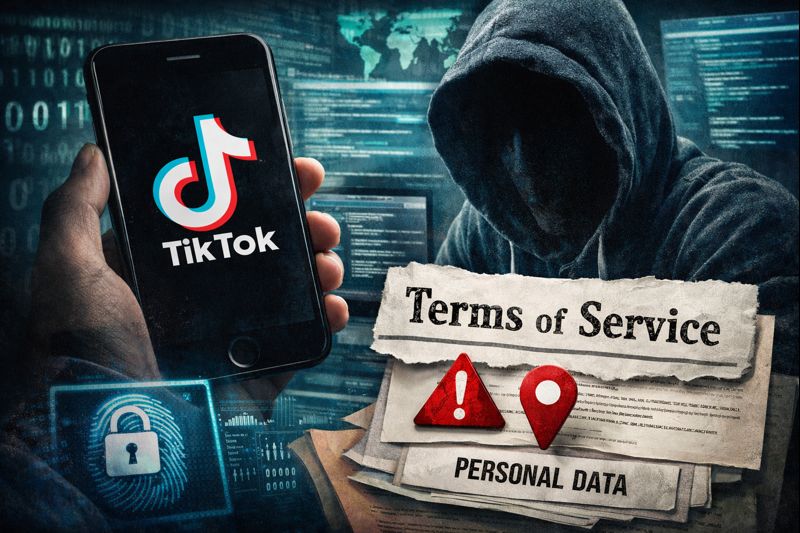
Why a lot of teens are suddenly rethinking their favorite app
TikTok has basically been the soundtrack to high school life for the past few years. From homework procrastination to finding new music, trends, and memes, it’s been the app. But recently, a lot of people—especially teens—are deleting TikTok after taking a closer look at its updated Terms of Service. And honestly? It’s kind of scary.
For a while, TikTok’s future in the U.S. was up in the air. There were constant rumors about the app getting banned because it’s owned by ByteDance, a Chinese company. Former President Donald Trump originally pushed the idea of banning it during his first term, claiming it could be a national security risk. That ban never fully happened, and after multiple deadline extensions, it looked like TikTok was here to stay.
Now, TikTok operates in the U.S. under a new setup called TikTok USDS Joint Venture LLC, which is supposed to function as an independent American entity. Big tech company Oracle is heavily involved, and TikTok says U.S. user data is now stored on Oracle’s cloud servers. On paper, that sounds reassuring—but many users aren’t convinced.
So what changed?
The real backlash isn’t just about who owns TikTok—it’s about what TikTok can collect from you.
According to tech site Tom’s Guide, TikTok updated its Terms of Service to comply with U.S. laws like California’s Consumer Privacy Act and national security requirements. But when users actually read the details, some of the changes raised major red flags.
Here are the three big ones that have people freaking out:
1. Collection of extremely sensitive data
TikTok already used your activity to shape your “For You Page,” but now the Terms of Service clearly state the app can collect information about things like:
-
Gender identity
-
Medical conditions
-
Immigration status
Other platforms like Instagram (Meta) collect data too, but mentioning things like immigration status feels like a whole new level. Seeing it written out made a lot of users uncomfortable.
2. Scanning content before you even post it
This one surprised a lot of people. TikTok says it can analyze videos even if you don’t upload them. That means content sitting in your drafts—or content you decide not to post at all—can still be scanned. TikTok claims this helps flag issues early and better understand user interests, but many users feel like that crosses a line.
3. Precise location tracking
Previously, TikTok only mentioned collecting “approximate” location data. Now, the language has changed to “precise geolocation.” While you can technically opt out, a lot of users didn’t even realize this was happening until they read the updated terms.
Why people are deleting the app
Once these changes started circulating online, reactions were intense. One user called TikTok “a data collection app disguised as social media.” Others worried about how TikTok could use their face or likeness in the future.
One viral comment summed it up perfectly: imagine deleting TikTok, then years later seeing your own face in an ad for a product you hate—because you agreed to it in a 50-page Terms of Service you never read. That’s some Black Mirror type stuff.
On Reddit, users urged others to delete social media apps altogether, saying our lives won’t fall apart without endless scrolling. Another former user admitted deleting TikTok was a wake-up call, realizing how unhealthy it is to spend hours scrolling through short videos and ads every single day.
Final thoughts
TikTok isn’t just a fun app anymore—it’s a reminder of how much personal information we give away without thinking twice. Whether you delete it or not, this situation is making a lot of high school students stop and ask an important question: Is the entertainment really worth the cost to our privacy?
At the very least, it might be time to actually read the Terms of Service before clicking “Agree.”